Marxism and Antifascism
To define antifascism, you must first define fascism; fascism is the promotion of militarism and nationalism to assert the supremacy of the state over notably class. A key way in which many fascist societies are formed is the backing of business interests to maintain relevance and authority. Antifascism in its very name is an ideology built out of a reaction to fascism, and one sect of this broader movement is that of the Marxists.
Marxists in stark contrast to the fascists, place the supremacy of class over that of state. The Marxist fights for the complete abolition of the capitalist system, which is the system that often supports the fascist and their rise to power.
Marxism, in fact, predates fascism with many notable authors writing evolving Marxist “theory” prior to, in concurrence to, and following the heyday of fascism. One such author who predated the rise of fascism but was very notable for her contributions to the Marxist “canon” was named Rosa Luxemburg.
The Early Life of an Intellectual
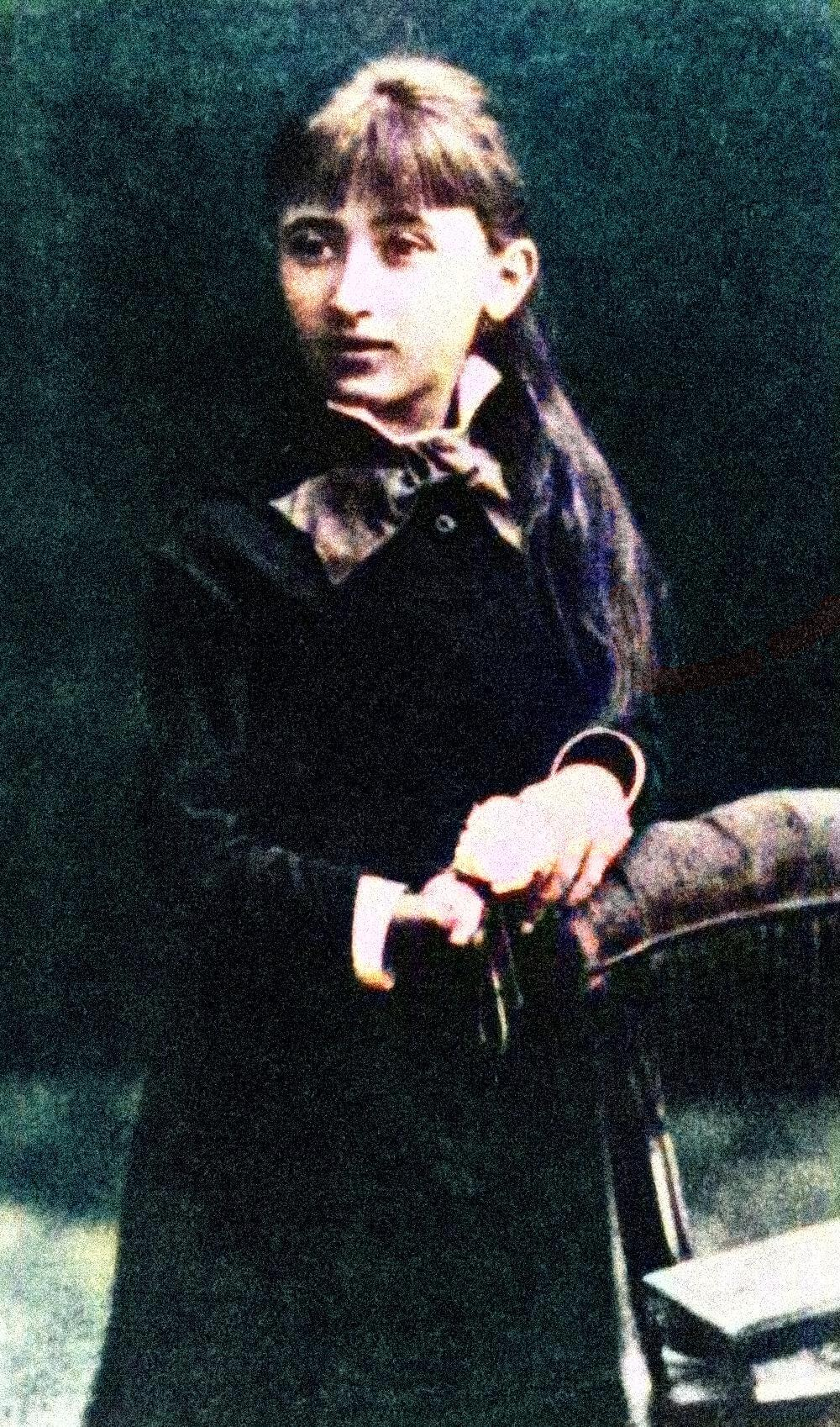
Rosa Luxemburg at age twelve.
Rosa Luxemburg was born in Russian occupied Poland in 1871 to a middle-class Jewish family and spent much of her adolescence in Warsaw. In 1884 she won a prestigious scholarship and went to the highest-regarded high school in the city.
During her years in high school, she was known for being rebellious and eventually began to study socialism. She would go on to participate in a movement called the Second Proletariat where in which she would advance her knowledge and understanding of Marxism.
Her family was rather interlinked with Germany and German culture with her father and brothers studying in the then empire as well as her mother being involved in German friendly literature groups. This family make up led to her knowing Polish, Russian, Hebrew, and German.
Her rebellious streak and her affinity for the burgeoning Marxist movement in Poland eventually drew the ire of the Russian authorities leading to her fleeing Poland. She then in 1889 headed to Zurich to expand her intellectual opportunities and experience the heart of international socialist debate.
Zurich and the Second International
Zurich in 1889 was a central hub of the global socialist movement, in part because of the number of emigres to the city. However, Luxemburg in her moving to the city sought not just comrades, but also further education.
Zurich was one of the few places not just on the Eurasian continent, but the entire world to offer university education to women. During her time in the Swiss city, she managed to earn a PhD in economics with her dissertation pertaining to economic development in Poland.
This basis in economics made her distinctly qualified to speak on the economic theory that is Marxism. The socialist movement at this time was incredibly localized, and she met figures that would go on to influence not just her, but the world. Some of these people were Kollontai, Lenin Jogiches, and the Luebeck couple.
While Luxemburg indeed made many friends, she also began to encounter ideological differences. One such group was the Polish Socialist Party which she opposed on the basis of seeking a unified front between Polish and Russian workers rather than Polish separatism. She also led a delegation at the Fourth Congress of the Second International in London in 1897.
The Early Days of Germany
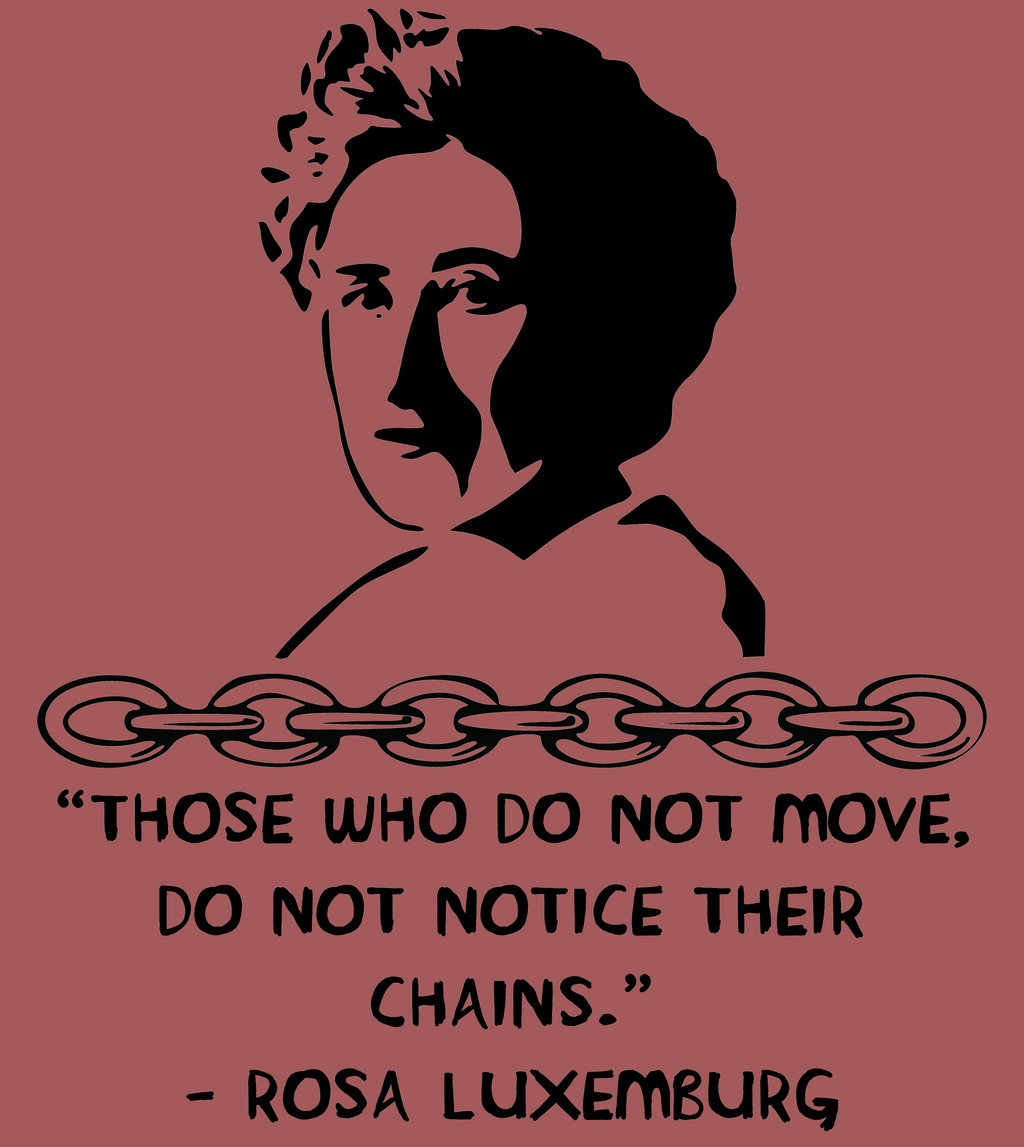
Rosa Luxemburg was always and forever a member of the radical wing, and until the day she died advocated for revolution.
Luxemburg arrived first in Berlin in 1898 but quickly volunteered in Upper Silesia which had a large Polish population. Her time in Silesia both heightened her confidence as well as showed to the higher ups within the Social Democratic Party (SPD) that she was a skilled orator and could be a useful asset.
In 1902 we see her skills as an author begin to reemerge beyond that of editing newspaper articles when she wrote a scathing review regarding a Belgian general strike. The piece was titled A Tactical Question, and one of its primary critiques was that of the capitulation on women’s suffrage and the failure of other labor leaders to properly support the action.
Splitting the Party
In 1905 the Jena Conference was held by the SPD to determine party policy; one such policy that was discussed and decided to be a last resort was that of general strikes. This move essentially placed the power of the strike into the hands of the Party rather than the union. The divide between the union moderate and party radical wings of the SPD began to show its true colors.
The declaration at Jena that general strikes would be on the table was considered a radicalist victory; however, the fate of the party would be decided the following year in Mannheim. This new conference did not invite the radical wing to be present, and even withheld the decisions made. This meeting essentially liberated the unions and curtailed the party.
The trend of the collapsing unity of the SPD continued in 1907 when at the Socialist International Conference in Stuttgart held in August, Luxemburg alongside Lenin advocated the radical position. Eventually the radical parties had won the argument presented at the Conference; however, they were isolated among the moderate wings of the ever more conservative SPD. This continued in September when the now anti-militarist radicals were ruthlessly attacked by the militarist moderates. Following this split, Luxemburg took time to draw back and take stock for whatever might come next.
World War
On the 4th of August 1914, the First World War as we think of it today began; so too on August 4th did the SPD authorize war credits to the dismay of Luxemburg and the anti-militarists. Following this action, Luxemburg continued to agitate and argue against the war; but was ultimately arrested in February 1915.
During her time in prison, Luxemburg wrote the Junius Pamphlet, which would go on to be the basis of the “International Group” of which she was a founding member following her release and subsequent rearrest. This new group would comprise another notable figure in one Karl Liebknecht.
Class War
Come November 1918 the war was over, and both Liebknecht and Luxemburg would be freed from their cells, though still shackled by society. Both of these figures quickly and to the disdain of the now governing SPD continued to rail against the prison that was capitalism. The new republic repeatedly undertook actions to hamper the International Group which due to this split from the SPD and founded the Spartacus League and the Communist Party of Germany (KPD).
It was then from January 5-12 that Berlin experienced the hope of revolution and the jackboot of counter revolution. This revolutionary movement was spearheaded by Liebknecht, and though the ultimate goal of Luxemburg was indeed revolution; it was done in her mind too early. This can indeed be seen by the presence of both federal troops and the government-sponsored paramilitary called the Freikorps.
January 14th: Order Reigns in Berlin, January 15th: The arrest of Luxemburg and Liebknecht and summary execution of the authors of revolution.
Bibligraphy: Council on Foreign Relations. “What Does Fascism Really Mean?: What is Fascism?.” Council on Foreign Relations. October 31, 2024. Education.cfr.org/learn/learning-journey/what-does-fascism-really-mean/what-is-fascism.
Luxemburg, Rosa. The Junius Pamphlet: The Crisis of German Social Democracy. Translated by Dave Hollis. (Illegally Published, 1916), chpt I, www.marxists.org/archive/luxemburg/1915/junius/ch01.htm.
Nixon, Jon. Rosa Luxemburg and the Struggle for Democratic Renewal. (Pluto Press, 2018), ebookcentral.proquest.com/lib/unm/reader.action?docID=5391111&c=RVBVQg&ppg=3.
Nettl, J. P.. Rosa Luxemburg. (Oxford University Press, 1966), www.fulcrum.org/epubs/k3569718k?locale=en#page=1.