Salaria Kea in the Spanish Civil War
Famous for her role as the only African American female nurse to volunteer for the Spanish Civil War, Salaria Kea used nursing as a vehicle to join the antifascist efforts during the Interwar period.
She did not stop once she returned from Spain, but instead continued raising awareness for the cause, served in the Army Nurse Corps, and took part in the desegregation efforts in New York City hospitals.
Like most Black antifascist women, Kea was part of a coalition of efforts to fight against racist oppression both in the United States and globally.
Early Life
Born in Georgia in 1911 as Sarah L. Kee, Kea’s early years are not easily traced. Based on most assumptions, her father died when she was very young, and her mother died not long after. By 1930 she was living in Akron, Ohio, with her brother-in-law as the head of the household. She describes her childhood in Ohio as a generally happy one, and graduated from West High School.
She appears to have been a bright student, a popular athlete, and a likeable classmate. Akron, Ohio in the 1920s was a typical product of Jim Crow America, with segregated schools, restaurants, and facilities.
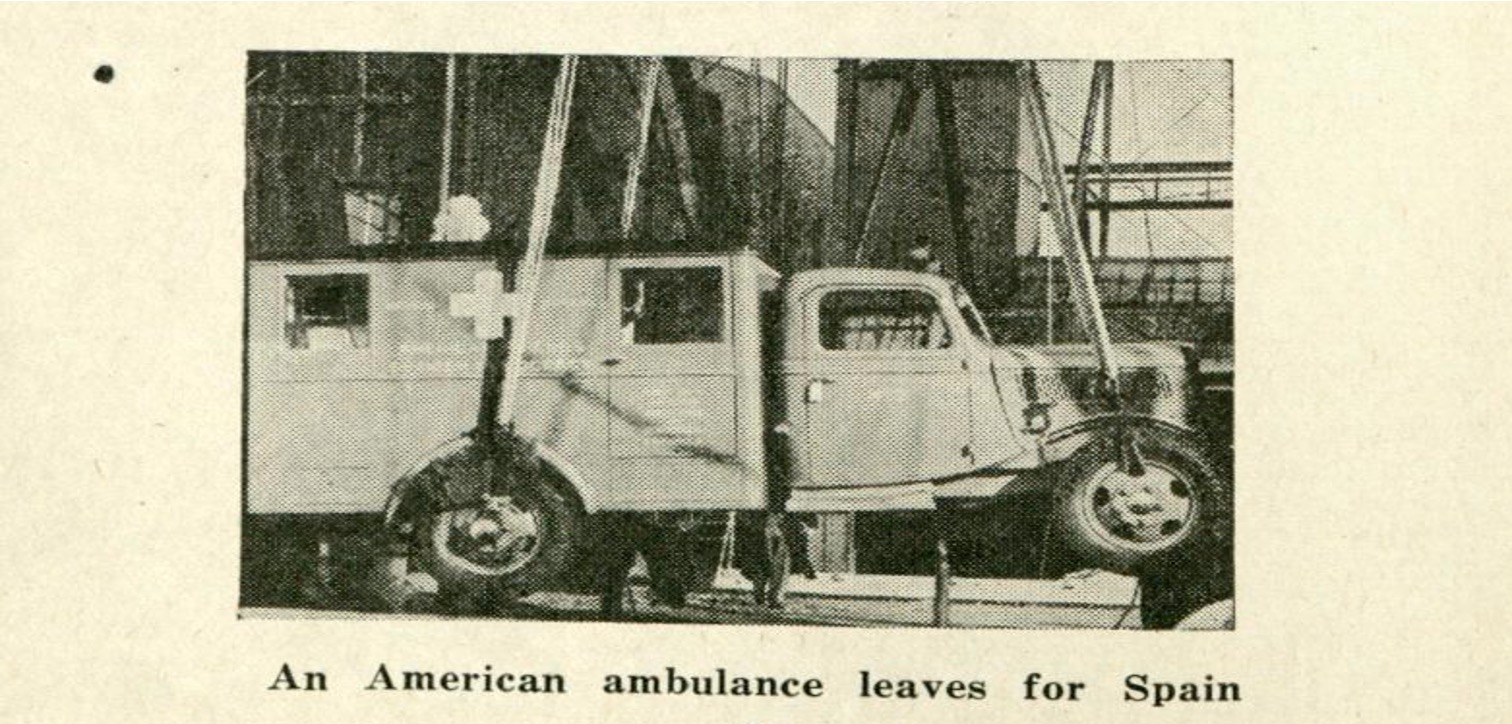
One of the American hospitals bound for Spain during the Spanish Civil War.
After finishing high school, Kea applied to local nursing schools in Ohio but was rejected because of her race, so she applied to nursing school in New York City instead.
The Spanish Civil War
Kea’s time in Spain is well-known in Spanish Civil War lore. Popularized by newspaper articles, documentaries, and propaganda materials to support the war effort in Spain, Kea’s role as the only female African American medical volunteer in Spain brought her notoriety and acclaim.
Kea left for Spain on March 26, 1937 with the third American Medical Bureau Unit with Dr. Donald Pitt and about ten other nurses on the ship Ile de France. The unit arrived in France, where the volunteers were transported across the Spanish border by train, then sent to Albacete, the International Brigade Headquarters.
Villa Paz
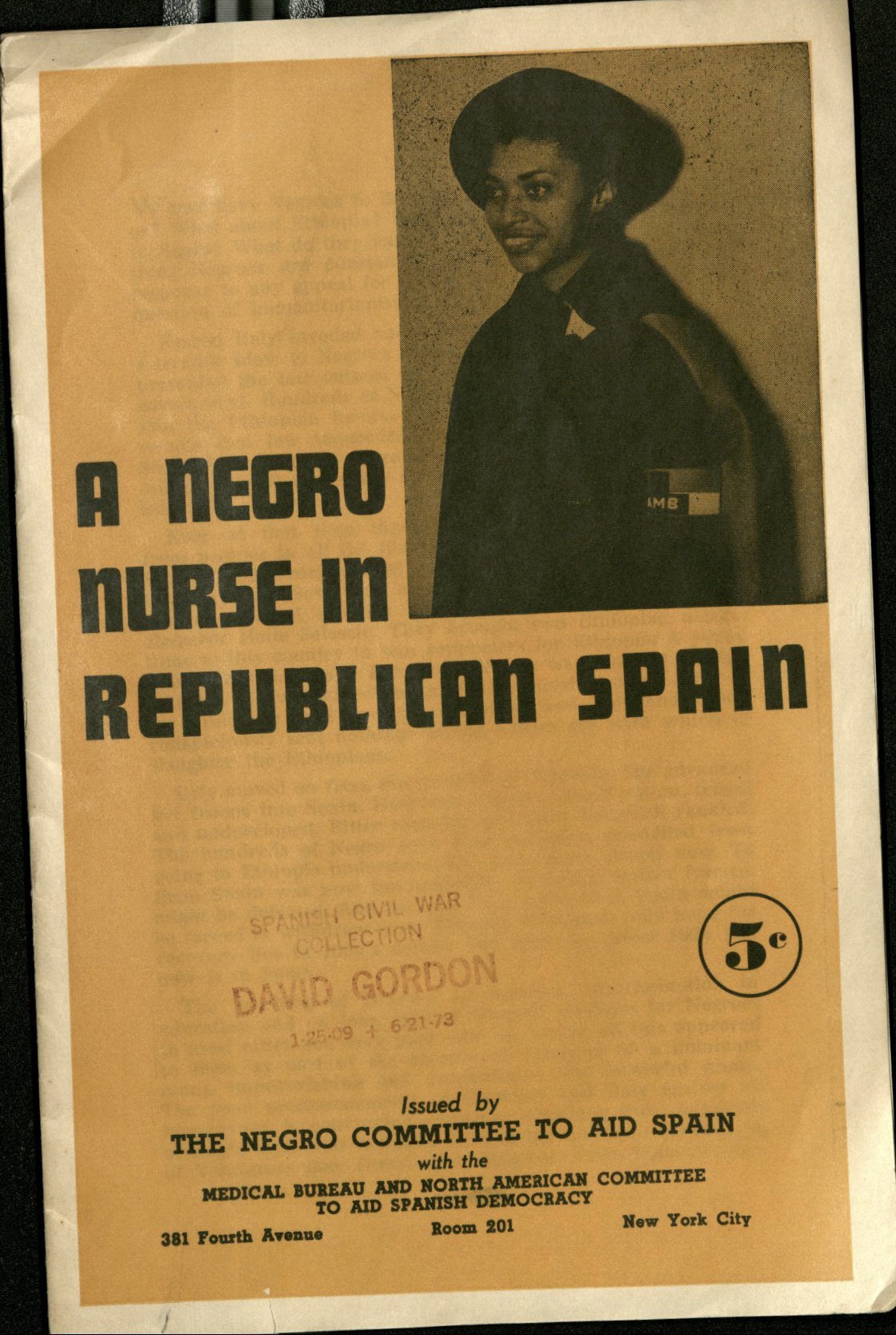
A Negro Nurse in Republican Spain propaganda pamphlet.
Although Kea would serve at least three other hospitals during her time in Spain, she spent the most time in service at Villa Paz, a convalescent hospital. Located deep in the Spanish countryside up a hill, it had once been a former hunting lodge for Alfonso X.
The villa was unoccupied, and the first American unit had previously arrived and converted it into a hospital. During the war the Republicans used many vacant luxurious buildings such as Villa Paz that had been abandoned by the Spanish elites in Republican territory.
Villa Paz was truly an exceptional hospital site – it had running water and beautiful views of the surrounding countryside. Kea’s time at Villa Paz, most popularly described in “A Negro Nurse in Republican Spain,” has remained crystallized and memorialized as a place where Kea worked “free of racism.” The pamphlet writes about how Kea likened her experience as a Black woman in the United States to the Spanish peasants living in the countryside while the elite lived in luxury. It certainly was a stark contrast that Kea must have observed during her time at Villa Paz
After Spain
After Kea returned from Spain she continued to protest fascism and oppression by raising money and awareness for Republican Spain, serving in the Second World War, and participating in the desegregation of New York City hospitals, as the color line began to fray during wartime needs and the emerging Civil Rights movement.
Her antifascism did not disappear, but instead evolved to incorporate more issues that Black nurses faced in the mid-twentieth century.
Ambulance Tour
Almost immediately after Spain, Kea embarked on a multi-city, two-month ambulance tour with Thyra Edwards, one of the only other Black American women to travel to Spain during the war.
Edwards was a social worker, who had gone to Spain in order to report on the children’s camps near Barcelona and further into the country. She understood as much as Kea did how badly the Republic continued to need supplies.
The ambulance tour, organized by the AMB, was well documented and reported upon by Edwards throughout their time. The tour seems to have forged genuine connections among the Black community who were invested in supporting the fight against fascism. Edwards writes about a young group of college students who were “extremely proud” that they had raised enough money to send an ambulance from Howard University, now an HBCU institution.
The Legacy of Salaria Kea
Her work as a Black nurse who rose through the ranks in a highly hierarchical institution – the American medical profession – in Jim Crow America places Kea at the center of Black feminist antifascism during the Interwar period.
Through Kea’s experience as a Black graduate nurse in the United States, her involvement in raising money and supplies to medically aid both Ethiopia and Spain, and her participation as the only Black American female International Brigades nurse during the Spanish Civil War, Kea was inextricably linked to the Black feminist antifascist movement domestically and internationally.
Sources: A Negro Nurse in Republican Spain, New York: The Negro Committee to Aid Spain with the Medical Bureau and North American Committee to Aid Spanish Democracy, 1938. Tamiment Special Collections, New York University, Fredericka Martin Papers, ALBA 001, Various Boxes.